Bauhaus Art Puzzles
The Bauhaus lasted just fourteen years, but it produced the visual language that every designer still speaks. Its thesis was radical: beauty and function are the same thing, and the simplest geometric form in the right proportion is more powerful than any ornament. Kandinsky's circles, Klee's grids, and Herbert Bayer's typography embody that belief. As a puzzle, Bauhaus compositions are a lesson in proportion and color theory assembled one piece at a time, and framed on a wall, they carry a century of design authority.
Make a Bauhaus puzzle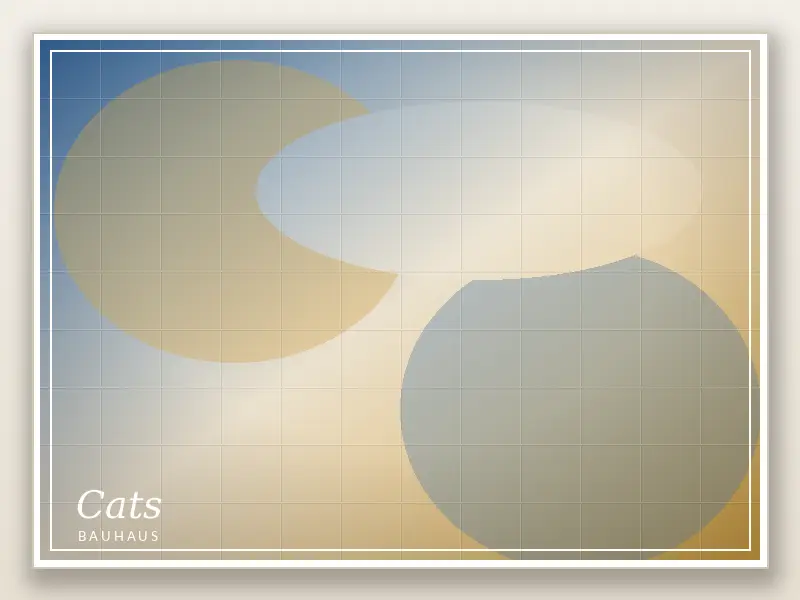
Geometry as challenge: assembling a Bauhaus puzzle
Bauhaus compositions work in circles, squares, triangles, and bars, arranged with mathematical precision. The clear geometric boundaries make piece placement logically satisfying: every edge is intentional, every color relationship exact. Large flat areas of primary color can be meditative; the compositional precision means the margin for error is smaller than in loose painterly styles. A completed Bauhaus design looks as resolved as the original school's workshop posters.
A century of influence and how it lives on your wall
The Bauhaus aesthetic has never stopped being the default language of good design: every grid layout, every sans-serif typeface, every product stripped to its functional essence owes something to the school. A Bauhaus puzzle on the wall signals that design literacy. It suits home offices, studios, and any room where purposeful objects are valued over decorative ones. The primary-color palette works especially well in spaces with industrial materials: concrete, steel, exposed brick, raw wood.
Frequently asked questions
What is the difference between Bauhaus and geometric abstract styles?
Bauhaus refers specifically to the visual vocabulary of that school: primary colors, strict geometry, grid-based composition, and a functional graphic character. Geometric abstract is the broader category; Bauhaus is one of its most historically specific and recognizable dialects.
Are Bauhaus puzzles difficult?
Moderate difficulty. The primary color contrast makes sorting clear, but large areas of a single bold color require patience. The grid structure helps orient your work as you go.
Does the Bauhaus style work in a home setting or is it too institutional?
The style is warm enough in its primary palette to work in a home, especially in rooms with natural wood, ceramics, or textiles that soften the graphic rigour. One Bauhaus piece as a focal point reads as sophisticated; an entire room in the style might feel more studio than home.